
All Categories
- All Categories
0
All Categories
- All Categories
Palladium (Pd) Coated Glass is a glass substrate featuring a thin palladium film deposited through controlled sputtering processes. Stanford Electronics uses advanced scanning electron microscopy and adhesion tests to monitor film uniformity and coating integrity during production. These rigorous in-house quality checks ensure that the palladium layer meets operational standards, providing a stable and inert surface for further semiconductor processing.
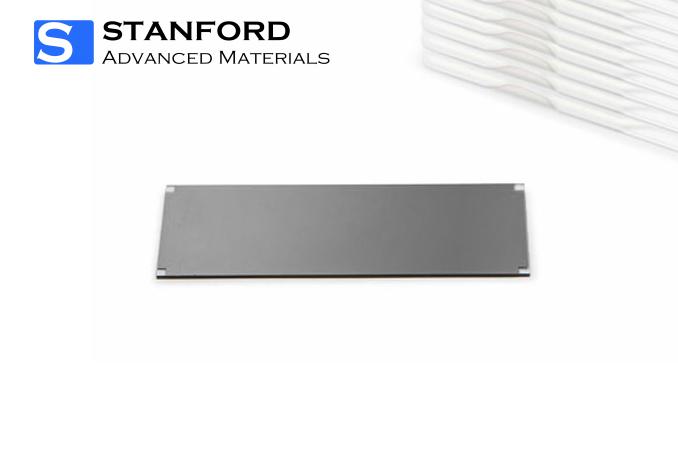
Palladium (Pd) Coated Glass is a high-performance glass substrate with a thin palladium layer applied using controlled sputtering techniques. The palladium layer enhances the surface conductivity and chemical inertness, serving as an effective barrier to oxidation and contamination in semiconductor processing. This uniform film thickness ensures consistency in microfabrication and supports high-precision applications in crystal substrate production.
|
Parameter |
Value |
|
Material |
Palladium, Glass |
|
Purity |
Pd: ≥99.95% |
|
Form |
Substrate |
|
Dimensions |
25*75*1 mm |
|
Adhesion Layer |
Titanium (30 Å) |
|
Pd Thickness |
1000 Å |
|
Coating Area |
Single Size (or customized) |
Note: The above product information is based on theoretical data and is for reference only. Actual specifications may vary.
1. Electronics and Semiconductor Fabrication
Conductive Barrier Layer: Prevents oxidation and contamination during semiconductor wafer processing, leveraging the chemically inert palladium surface.
Interface Layer in Microfabrication: Provides stable bonding and uniform coating for semiconductor devices.
2. Industrial Instrumentation
Sensor Devices: The palladium coating enhances signal integrity by reducing contact resistance, improving the reliability of sensor devices in industrial settings.
The Palladium (Pd) Coated Glass substrates are carefully packaged in anti-static, cushioned carriers and sealed in moisture-resistant bags to protect them from environmental contaminants. The packaging ensures temperature and humidity control to prevent mechanical damage and preserve coating integrity. Custom packaging options, such as barcoding and compartmentalization, are available to meet specific storage and logistical requirements.
Glass substrates with thin metal coatings, such as palladium, are vital for semiconductor manufacturing. The palladium layer improves surface stability and conductivity, addressing key challenges in microelectronic device fabrication. Stanford Electronics uses advanced sputtering techniques to achieve precise film thickness and uniformity, ensuring that these substrates meet the rigorous standards required for high-performance semiconductor applications.
|
Parameter |
Value |
|
Material |
Palladium, Glass |
|
Purity |
Pd: ≥99.95% |
|
Form |
Substrate |
|
Dimensions |
25*75*1 mm |
|
Adhesion Layer |
Titanium (30 Å) |
|
Pd Thickness |
1000 Å |
|
Coating Area |
Single Size (or customized) |
The above product information is based on theoretical data and is for reference only. Actual specifications may vary.
E-mail address with your company's domain name is preferred. Otherwise, we may not be able to process your inquiry.
Please fill in the required fields.