How to Choose ITO Target Composition? What's the Difference Between 90:10, 93:7, and 97:3?
When you're shopping for ITO targets, the first thing that jumps out at you is the composition ratio—90:10, 93:7, 97:3. But what do these numbers actually mean? And more importantly, which one should you pick?
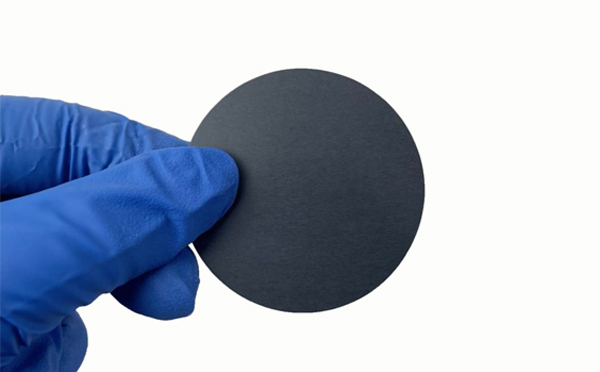
90:10 – The Industry Standard, Does It All
90:10 (90% indium oxide + 10% tin oxide) is the most widely used ITO formulation out there. It accounts for roughly 90% of the market. Pretty much every flat-panel display, touchscreen, and solar panel you've ever seen runs on this ratio.
Why is it so popular? Because it nails the trade-off between conductivity and transparency. Indium oxide lets light through, and tin oxide lets current flow. 90:10 hits that sweet spot where both are at their best. Films made with this ratio deliver over 85% light transmittance, stable conductivity, and a well-established, reliable process. You honestly can't go wrong with it.
If you're making standard LCDs, OLED displays, or touchscreens, just go with 90:10 and move on. No need to overthink the composition.
93:7 – Prioritizing Transparency, Tilting Toward Optics
The thinking behind 93:7 (dropping the tin oxide down to 7%) is pretty straightforward: use less tin, make the film more transparent.
We've had customers run into this exact situation—working on infrared touchscreens where light transmission is absolutely critical. The standard 90:10 just didn't feel transparent enough. So they dialed the tin down to 7%. The film got noticeably clearer, but the trade-off was that the resistance started to get a little flaky.
So 93:7 is a good fit for applications where transparency takes priority and you're willing to compromise a bit on conductivity—like infrared touchscreens or certain high-transmission optical films. If you have strict transmittance requirements, give this ratio a shot. Just keep in mind: the conductivity might not be quite as solid.
97:3 – For Specialty Applications Where Speed Matters
97:3 (only 3% tin oxide) is the "extreme" formulation. Its main claim to fame is faster deposition rates and fewer nodule defects forming on the target surface during sputtering—which translates to higher productivity.
The downside? It's tough to sinter. With that little tin in the mix, the target is really hard to densify during manufacturing, which means it tends to have internal porosity. That said, this can be mitigated with the right process—studies show that sintering in an oxygen atmosphere can bump the relative density from 87% up past 99%.
97:3 works well for applications like heterojunction solar cells, where optical performance and deposition efficiency are high priorities. But unless you have a specific reason to go with it, stick with 90:10.
How to Pick the Right One
Think of it this way: 90:10 is your default. 93:7 and 97:3 are fine-tuned variations for special cases.
|
Your Priority |
Recommended Ratio |
|
Standard displays, touchscreens, general PV |
90:10 – safest bet |
|
Ultra-high transmittance, conductivity can flex a bit |
93:7 – more transparent |
|
Deposition speed and nodule resistance are key |
97:3 – faster throughput |
One more thing—purity matters more than the ratio. No matter which composition you choose, make sure you're using 99.99%+ electronic-grade indium oxide and tin oxide. Industrial-grade impurities will kill your film quality before you even get started.
Stanford Electronics can custom-tailor ratios to your needs—90/10, 93/7, 95/5, 97/3, even 98/2. Whatever works for your application.