Vanadium Pentoxide Evaporation Materials in Optical and Electronic Applications
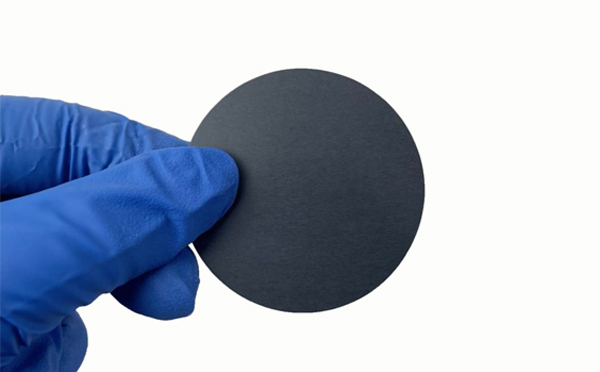
Vanadium pentoxide (V₂O₅) evaporation material is a high-purity functional oxide source designed specifically for physical vapor deposition processes like thermal evaporation and electron-beam evaporation. Thanks to its unique layered crystal structure and multi-valence characteristics, V₂O₅ thin films show a wide range of potential applications in optical control and electronic devices.
V2O5 Electrochromic Films for Smart Windows
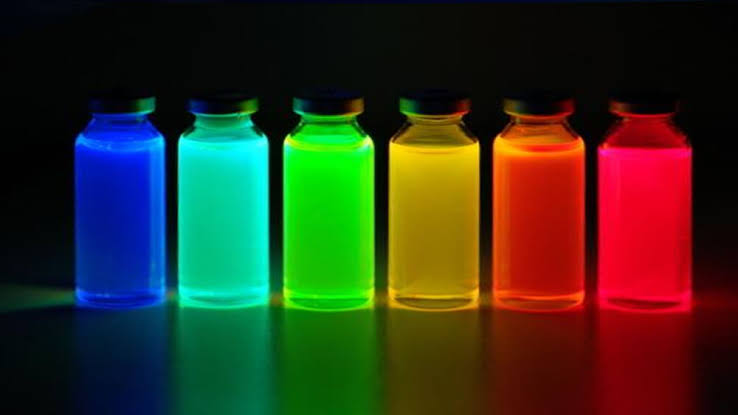
The most closely watched optical application of V₂O₅ is electrochromism. This material undergoes reversible color changes as lithium ions are inserted and extracted, switching between transparent yellow and multi-color states including blue, green, and purple.
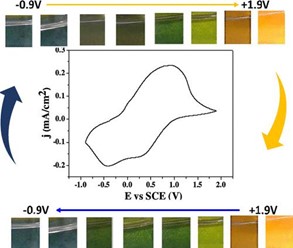
For electrochromic applications, thermally evaporated V₂O₅ films demonstrate impressive optical modulation capability. One study showed that thermally evaporated rod-shaped V₂O₅ films achieved 30.13% optical contrast at 436 nm, with response times under 4 seconds and good cycling stability. Another study used activated reactive evaporation to prepare nanocrystalline V₂O₅ films on flexible Kapton substrates, achieving 36.1% optical modulation at 550 nm and a coloration efficiency of 26.2 cm²/C.
What makes V₂O₅ stand out is its ability to show multi-color electrochromism. Theoretically, by controlling how much lithium is inserted, V₂O₅ can switch between yellow, green, and blue. This gives it a differentiating edge in smart windows — compared to single-color switching materials, multi-color control offers more flexible options for building energy efficiency and visual comfort.
V2O5 Thermochromic Coatings for Optical Switching
Vanadium pentoxide also has thermochromic properties, meaning its color changes with temperature. This has been used to make thermochromic coatings for energy-efficient buildings. Beyond that, V₂O₅ shows tunable optical behavior in the near-infrared range.
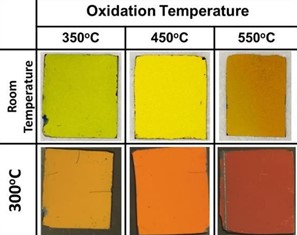
Research has found that through crystal facet engineering and oxygen vacancy engineering, V₂O₅ films can independently control visible and near-infrared light — opening up new possibilities for dual-band electrochromic devices.
V2O5 Optoelectronic Synapses for Neuromorphic Computing
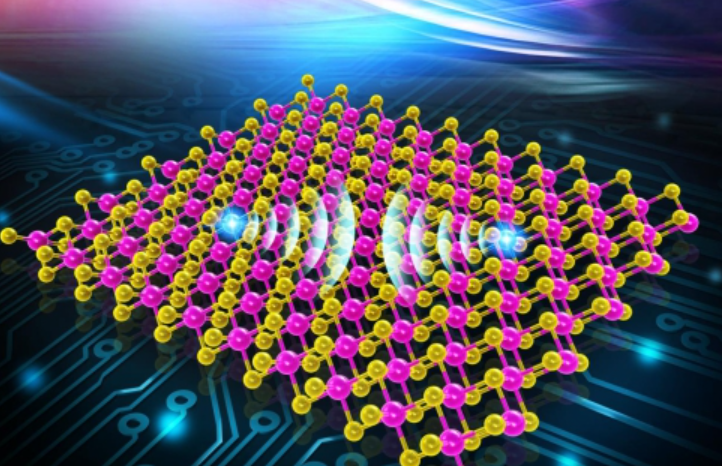
An emerging application of V₂O₅ in optoelectronics is the optoelectronic synapse. Studies show that solution-processed mesoscopic α-V₂O₅ films exhibit persistent photoconductivity and optoelectronic synaptic behavior. First-principles simulations reveal that terminal oxygen vacancies cause photogenerated electrons and holes to reside in different layers separated by van der Waals gaps, forming weakly coupled interlayer exciton polarons. This mechanism allows V₂O₅ films to respond to light across both visible and infrared bands. And by controlling the intensity, duration, or number of light pulses, tunable optoelectronic memory functions can be achieved — including both short-term and long-term plasticity.
V2O5 Thin Films for Electronic Devices and Sensors
V₂O₅'s reversible metal-insulator transition makes it suitable for electronic devices like memristors and sensors. This transition can be triggered by external stimuli such as temperature, voltage, or light, enabling precise control over device behavior.
For gas sensing, V₂O₅ shows good response to gases like ethanol, with detection limits down to the 0.1 ppm level. It's also used as a bolometer material in thermal imaging detectors thanks to its high temperature coefficient of resistance.
V2O5 Evaporation Materials for Optical Coatings
In the optical thin film space, V₂O₅ evaporation material can be used to make anti-reflective coatings, optical filters, and infrared detectors. These coatings improve light transmission efficiency and reduce glare, enhancing the performance of optical devices.
Research also shows that high-quality V₂O₅ films can be epitaxially grown on sapphire substrates by thermal evaporation, with surface roughness as low as 1.5 Å (RMS). The films are highly crystalline with a (0001) orientation, and the vanadium ions exist mainly in the V⁵⁺ oxidation state. This kind of high-quality epitaxial film provides an ideal platform for studying V₂O₅'s intrinsic electronic structure and developing nanodevices based on its unique electronic properties.
Material Specifications and Sourcing
V₂O₅ materials for evaporation coating are typically supplied as powders, granules, or custom shapes, with purity ranging from 99.9% to 99.999%. Common specifications include granule sizes like 3×6 mm and 6×6 mm, and custom sizes are also available on request.
Stanford Electronics offers 99.9% purity vanadium pentoxide (V₂O₅) evaporation material in powders, granules, and custom shapes to meet a variety of needs in optical coating and electronic device R&D.
References
[1]. I-Han Wu, Arvind Chandrasekar, Kumaravelu Thanigai Arul, Yu-Cheng Huang, Ta Thi Thuy Nga, Chi-Liang Chen, Improving electrochromic properties of V2O5 smart film through Ti incorporation: Local atomic and electronic perspectives, Optical Materials: X, Volume 22,2024,100301,ISSN 2590-1478, https://doi.org/10.1016/j.omx.2024.100301.
[2]. Kumar S, Maury F, Bahlawane N. Optical and morphological properties of thermochromic V2O5 coatings. Data Brief. 2017 Jul 14;14:348-353. doi: 10.1016/j.dib.2017.07.028. PMID: 28795113; PMCID: PMC5545823.
[3]. Venkat Sunil Kumar Channam. Synthesis of strongly correlated oxides and investigation of their electrical and optical properties. Other. Institut National Polytechnique de Toulouse - INPT, 2017. English. ⟨NNT : 2017INPT0075⟩. ⟨tel-04223338⟩