Bismuth Telluride: The Best Thermoelectric Material at Room Temperature
Bismuth telluride (Bi₂Te₃)-based materials are widely recognized as the best-performing thermoelectric materials around room temperature (roughly 0–250°C). They're also the only thermoelectric system that's been scaled up for large-scale commercial use.
Wide Applications of Bismuth Telluride
Thanks to their stable, high-efficiency performance at room temperature, Bi₂Te₃-based devices have become the go-to choice in many fields.
-- Thermoelectri Cooling & Temperature Control
Bismuth telluride thermoelectric cooling technology is already used in a bunch of areas. In high-end manufacturing, it helps with thermal management for precision equipment like infrared detection systems and lasers. In labs, you'll find it in cold traps, chillers, low-temperature testers, incubators, and more. And in everyday life, products like mini fridges, wine coolers, water dispensers, and dehumidifiers also rely on bismuth telluride cooling.
-- Waste Heat Harvesting (Power Generation)
Bi₂Te₃ can be used to recover waste heat from various sources. In electric vehicles, for example, it captures the temperature difference between the engine and the outside air to convert waste heat into electricity—powering onboard electronics and helping improve energy efficiency and driving range. In industrial settings, it can generate power from equipment waste heat, cutting down on energy loss and carbon emissions.
-- Flexible & Wearable Devices
As wearable tech keeps growing, bismuth telluride is showing real promise in flexible thermoelectrics. By combining Bi₂Te₃ with flexible materials like carbon nanotubes, you can create thermoelectric films that bend well. These composites have a nano-porous structure, and the deposited Bi₂Te₃ nanocrystals stick tightly to the surface of the carbon nanotube bundles—they still perform great even after 1,000 bending cycles. You can cut these materials into any shape using microfabrication techniques, making them a solid fit for self-powered applications in smartwatches, health monitors, and other wearables.

How Bismuth Telluride Is Made
There are several ways to make bismuth telluride materials.
Hot extrusion is a well-established method. It pushes the material through a die at high temperatures to shape it through plastic deformation. The resulting Bi₂Te₃ ingots have a uniform microstructure and stable performance, all while keeping production efficiency and costs in check.
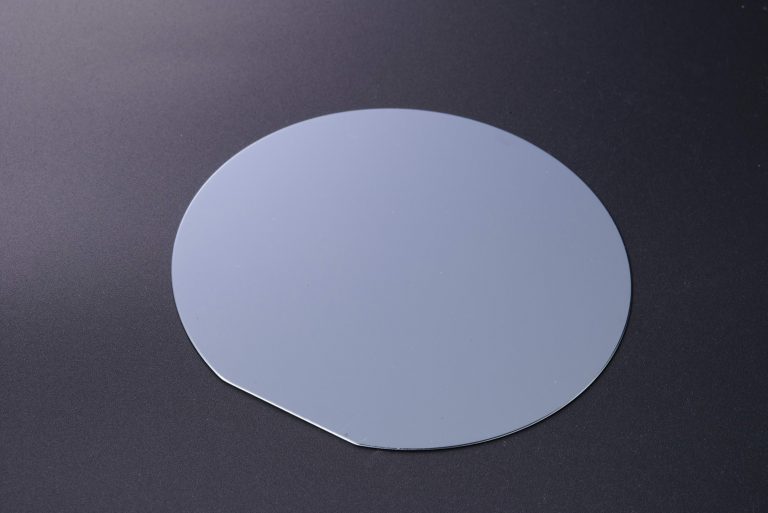
For thin-film forms of bismuth telluride, thermal evaporation works well on different substrates like glass or silicon dioxide. Studies show that Bi₂Te₃ films made this way have good crystallinity and a dense, uniform surface, with an optical bandgap of around 2 eV.
There's also a roll-to-roll dynamic deposition method for thin-film production. It uses metallic tellurium and bismuth as evaporation sources to coat a flexible substrate, followed by annealing. This method can produce meter-scale—or even hundred-meter-scale—large-area bismuth telluride thermoelectric films, making mass production possible.
Stanford Electronics follows strict quality control procedures to deliver Bi₂Te₃ evaporation materials with purity as high as 99.9995%, ensuring consistent and reliable results. Get A Quote.
For bulk materials, you can use spark plasma sintering (SPS) to make nanocrystalline bismuth telluride. Just mix nano-sized tellurium and bismuth powders in the right stoichiometric ratio, then sinter them under an axial pressure of 30–50 MPa in a vacuum. The result is a nanocrystalline Bi₂Te₃ bulk material with grain sizes between 30 and 100 nanometers.