Coated Glass: A Guide to Nine Types of Functional Coatings
Coated glass refers to glass with a layer or multiple layers of metals, alloys, or metal compounds deposited on the glass's surface. These deposited materials are usually a few nanometers in thickness, though they can affect the glass in important ways, whether in terms of optics, electricity, or even its surface properties. Coated glass can be found in a variety of applications, from buildings with efficient use of energy to electronic devices, optics, aerospace, and medical equipment, among others.
This article covers nine different types of coated glass, each using a different metal or compound: aluminum, platinum, palladium, copper, silver, gold, molybdenum, iridium, and titanium nitride. For each one, we'll go over what makes it special and where it's used.
1. Aluminum-Coated Glass
Aluminum-coated glass has a thin layer of metallic aluminum deposited on the surface.
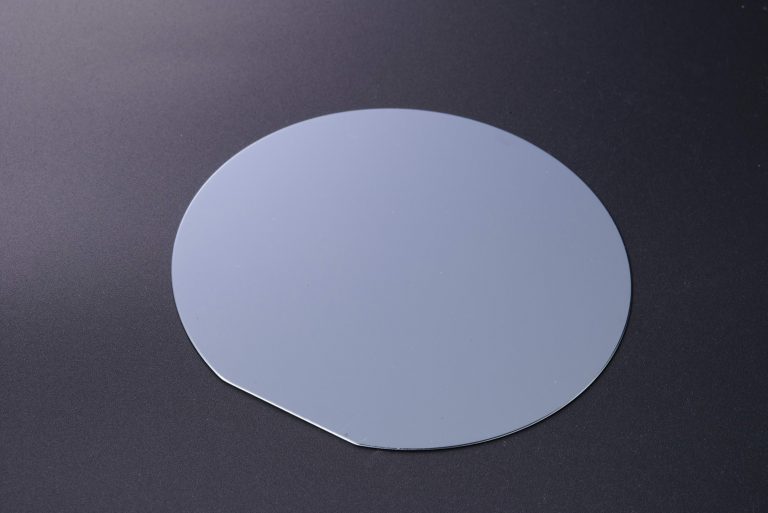
CY11164 Aluminum (Al) Coated Glass
What it does well:
- Reflects visible light and UV rays effectively
- Relatively low cost
- Good electrical conductivity
- Lightweight
Aluminum-coated glass is commonly used on building facades, where it helps control solar heat gain by reflecting infrared radiation and gives the building a modern look with the silvery color of aluminum. It also plays a role in more technical applications—aluminum-coated fiberglass is used in electric vehicle battery thermal management and 5G device shielding because it's lightweight and strong. In the optical field, many astronomical telescope mirrors use aluminum coatings due to their high reflectivity in the UV and visible spectrum.
2. Platinum-Coated Glass
Platinum-coated glass uses platinum or a platinum-rhodium alloy as the functional layer. Platinum melts at around 1,768°C and is extremely stable chemically.
What it does well:
- Very high melting point
- Chemically inert—won't react with molten glass
- Resists corrosion and oxidation
- Won't discolor or contaminate glass
However, the real role of platinum in glass is in the glass production process, not as a coating on the glass itself. Platinum and platinum-rhodium are utilized to produce stirrers, plungers, and delivery tubes for glass production furnaces. These materials are directly involved in the production of glass, but they do not contaminate the glass. It is important for the production of high-quality optical glass, smartphone screens, and medical glassware, including vaccine vials. And the only other use of platinum as a coating is on X-ray mirrors for space telescopes to increase reflectivity.
3. Palladium-Coated Glass
Palladium-coated glass is made by depositing a thin film of palladium onto glass, usually through a method like magnetron sputtering.
What it does well:
- Chemically stable
- Good electrical conductor
- Can serve as a barrier layer to prevent oxidation
- Available in high purity (99.95% or more)
Palladium-coated glass is mostly used in semiconductor processing, where it is applied as a barrier for wafers. The inert nature of palladium is very helpful in preventing oxidation. It is also applied in MEMS, where it is applied as an interface layer for stable interfaces, and sensors, where palladium is applied as a coating on glass for contact resistance.
4. Copper-Coated Glass
Copper-coated glass has a thin layer of metallic copper on the surface.
What it does well:
- Kills bacteria across a broad spectrum
- Good electrical conductor
- Can be applied over large areas using methods like plasma spraying
- Coating transparency can be adjusted
Copper-coated glass has found a strong niche in healthcare and public spaces because of its antibacterial properties. It can kill 99.9% of Gram-positive and Gram-negative bacteria within five hours, and the effect lasts up to three days, making it useful on high-touch surfaces like hospital touchscreens and public facility panels. Additionally, because the copper layer conducts electricity, it can serve as a heating element—at just 2 volts, it can raise the surface temperature by about 7°C, which makes it effective for defogging and defrosting applications.
5. Silver-Coated Glass
Silver-coated glass uses silver or a multi-layer silver-based coating as the functional layer.
What it does well:
- Highest reflectivity of any metal
- Excellent at reflecting infrared radiation
- Best electrical conductivity among metals
- Coating is relatively delicate—usually needs to be protected inside insulated glass units
Silver-coated glass is best known for its role in Low-E (low-emissivity) glass, where it's the key material in multi-layer coatings that let visible light through while reflecting infrared heat. This makes it a cornerstone of energy-efficient building design. Beyond architecture, silver coatings are used in high-performance mirrors—astronomical telescopes, optical instruments, and premium mirrors all rely on silver for maximum reflectivity. You'll also find silver-coated glass flakes in automotive paint, phone casings, and high-end packaging, where they create a metallic shimmer.
6. Gold-Coated Glass
Gold-coated glass is made by depositing a gold film onto glass using vacuum coating methods or by applying gold leaf.
What it does well:
- Extremely stable—won't oxidize or corrode
- Highly reflective in the infrared range
- Warm golden color
- Resists UV exposure and chemical attack
Glass coated with gold is most commonly seen in high-end architecture to cover the exterior and interior of buildings, particularly hotels and business spaces. Because it gives off the appearance of gold, and reflects the sun’s rays. In the field of technology, gold-coated glass is the preferred choice for infrared mirrors, particularly in the scientific and industrial sectors. The use of gold is also seen in the aerospace industry, where it is required to protect spacecraft parts from atomic oxygen as well as temperature fluctuations in space, particularly on X-ray telescope mirrors. Glass coated with gold is also seen in the automotive industry, as well as consumer electronics, where it is typically used to decorate devices.
7. Molybdenum-Coated Glass
Molybdenum-coated glass has a thin layer of molybdenum on the surface. Molybdenum is a refractory metal with a very high melting point (2,623°C).
What it does well:
- Thermally stable
- Resists corrosion
- Can be laser-patterned to create microstructures
- Bonds well to the glass substrate
One of the most interesting applications of molybdenum-coated glass is in antifog and self-cleaning products. When the coating is treated with a fast laser process, it forms micro- and nano-scale structures that make the surface superhydrophilic—water contact angle drops to 0°. Instead of forming fog droplets that scatter light, water spreads into a continuous film. This effect is surprisingly durable, showing little degradation after 12 months, and if the surface gets contaminated with organic material, a one-second flame treatment restores the antifog properties completely. That combination makes it practical for car windshields, optical lenses, and medical endoscopes. Molybdenum is also used as a back electrode in thin-film solar cell manufacturing.
8. Iridium-Coated Glass
Iridium-coated glass has a thin film of iridium on the surface. Iridium is one of the rarest and most expensive platinum-group metals.
What it does well:
- Exceptionally high reflectivity for X-rays—better than gold or platinum
- Very hard and wear-resistant
- Extremely corrosion-resistant
- Chemically stable
Iridium glass is very specialized and is mostly used in very specific, high-end applications in aerospace and research. The main use for iridium glass is in X-ray astronomy, as iridium is more reflective of X-rays than other materials, such as gold or platinum, and is often used for X-ray telescope mirrors for use in space. The NuSTAR mission, run by NASA, utilizes iridium mirrors for X-ray focusing. In lightweight X-ray optics designs, thin-glass Wolter I telescopes with iridium coatings provide large collecting area while keeping weight low, which is critical for space missions.
9. Titanium Nitride-Coated Glass
Titanium nitride (TiN)-coated glass is produced by applying a ceramic TiN film to the glass surface using processes like vacuum arc deposition.
CY11158 Titanium Nitride (TiN) Coated Glass
What it does well:
- Metallic-looking golden color
- Corrosion-resistant
- High hardness and wear resistance
- Dense coating that bonds firmly to glass
Titanium nitride-coated glass is important because it combines aesthetic and durability factors. The material has a golden color and is used as a coating in building facades, interior decoration, and furniture. The TiN-coated glass is also corrosion-resistant compared to titanium dioxide. The TiN coating is applied uniformly over large glass surfaces using industrial vacuum arc deposition equipment. The TiN coating can be textured using a polymer mask.
Summary Table
|
Coating Type |
Applications |
|
Aluminum |
Building facades, telescope mirrors, EMI shielding |
|
Platinum |
Glass manufacturing tools, X-ray optics |
|
Palladium |
Semiconductor barriers, MEMS, sensors |
|
Copper |
Medical touchscreens, public facilities, defogging glass |
|
Silver |
Low-E glass, high-end mirrors, decorative pigments |
|
Gold |
Premium architecture, IR optics, spacecraft coatings |
|
Molybdenum |
Antifog glass, windshields, thin-film solar back electrodes |
|
Iridium |
Space-based X-ray telescopes, aerospace optics |
|
Titanium Nitride |
Architectural decoration, protective coatings, large-area patterned glass |
FAQ
1. How is coated glass produced?
There are various ways to produce coated glasses, including vacuum magnetron sputtering, chemical vapor deposition (CVD), vacuum evaporation, and sol-gel coating.
2. What is Low E Glass?
Low-E glass is a kind of coated glass whose coatings are usually composed of silver, copper, and tin. They are able to reflect infrared rays and allow visible light to pass through.
3. What's the difference between solar control and Low-E glass?
Solar control glass (often called reflective glass) is designed primarily to reflect solar infrared radiation and reduce heat gain in summer. Low-E glass works year-round—it reflects interior heat back inside during winter and blocks outside heat during summer. The coating structures and applications are different.
4. How durable is silver-coated glass?
Silver coatings are soft and easily scratched. In addition, the silver can oxidize over time. Because of this, silver-coated glass is nearly always specified for use as part of an insulated glass unit (IGU), where the coating is protected from moisture and scratching by the space between the two panes.
5. How does antifog coated glass work?
Most antifog coatings work by making the surface superhydrophilic—water contact angle close to 0°. Instead of forming tiny droplets that scatter light, water spreads into a continuous film. Laser-treated molybdenum coatings are one example of this approach.
6. Why are platinum and iridium used in aerospace applications?
The reflectivity of platinum and iridium metals for X-rays is high. Space is a harsh environment for these metals. To focus X-rays of high energy, an X-ray telescope must be made of a highly reflecting coating. The reflectivity of iridium is even higher than that of gold and platinum.
7. How long does the antibacterial effect of copper-coated glass last?
Tests show that copper-coated glass maintains effective antibacterial performance for up to three days, killing 99.9% of bacteria within five hours. This makes it useful for healthcare settings and public spaces.