.jpg "Silicon Dioxide (SiO2 quartz)")
Can Lanthanum Nickel Alloy Be Used in Solid-State Batteries?
Yes, lanthanum nickel alloy (typically LaNi5) can be used in solid-state batteries—but not quite in the way many people think. It's not a core material for conventional lithium-ion solid-state batteries. Instead, it connects to solid-state battery technology through two main pathways: solid-state hydrogen storage and advanced lithium-metal batteries.
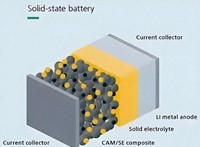
1. As a Solid-State Hydrogen Storage Material for "Hydrogen-Electric" Systems
This is the most direct and well-established use of LaNi5 in solid-state batteries. But here, "solid-state battery" means a device that stores electrical energy through hydrogen storage and conversion—not the lithium-ion solid-state batteries you usually hear about.
Lanthanum nickel alloy can reversibly absorb and release hydrogen at room temperature and pressure, forming a hydride called LaNi5H6. This makes it suitable for use as a solid-state electrolyte or anode material in metal hydride–hydrogen batteries. During charging, water or hydroxide ions react at the electrode to form hydrogen atoms, which are stored as a hydride in the alloy. During discharging, the process reverses—hydrogen atoms are oxidized and release electrons.
Lanthanum nickel-based alloys work under mild, near-room-temperature conditions. They have good hydrogen absorption/desorption kinetics and can tolerate some impurities in the hydrogen gas. Studies show that with improved compositions, their electrochemical discharge capacity can reach about 450 mAh/g, and cycle stability gets significantly better.
This material system is already fairly mature. For example, one prototype device used LaNi5 to replace expensive precious metals like platinum and palladium as the anode catalyst, successfully cutting raw material costs while still allowing the battery to charge and discharge.
2. As a Derivative Material for All-Solid-State Lithium-Metal Batteries
This is a newer, cutting-edge direction in next-generation solid-state lithium battery research. One important note: this doesn't use LaNi5 alloy directly. Instead, it uses derivatives or related compounds.
Researchers have developed a class of lanthanide-based halide solid electrolytes. Some of the materials were even created based on the crystal framework design of the LaNi5 material. The new electrolytes have very good conductivity for lithium ions at ambient temperatures and also very good interfacial stability against lithium metal electrodes.
A fully solid-state lithium-metal battery prototype that uses lanthanide-based halide solid electrolytes cycled stably above 100 times at room temperature without any additional interface treatments such as electrode layers. This is a huge breakthrough in solid-state battery interface design.
In cathode material design, LaNiO3 (lanthanum-nickel oxide) can be used as a coating layer or structural buffer phase. For example, one study introduced a LaNiO3 precursor into a high-nickel ternary cathode material. During cycling, it converted in situ into the target phase, effectively relieving internal stress caused by volume changes in the cathode. This significantly improved cycle stability in all-solid-state batteries under high voltage and high temperature.
Bottom Line
Lanthanum-nickel alloys (especially LaNi5) play an important role in solid-state batteries—but mainly as hydrogen-storage electrode materials in metal hydride–hydrogen batteries or nickel-metal hydride batteries. Their crystal structure derivatives are also being used to develop new lanthanide-based halide solid electrolytes. Meanwhile, their oxide form (LaNiO3) serves as a structural stabilizer for cathodes in high-voltage all-solid-state lithium-metal batteries.
Stanford Electronics offers high-quality lanthanum-nickel alloy (LaNi5) pellets to support solid-state battery development.