Understanding Optical Metamaterial Ingredients Through the Split-Ring Resonator
Split-Ring Resonator
In the history of optical metamaterials research, one structure has truly stolen the spotlight: the split-ring resonator (SRR).
Split-ring resonator 1 Split-ring resonator[1]
What does it look like? It's pretty simple—a tiny C-shaped ring made of metal, just a few hundred nanometers across. That's way smaller than a red blood cell. This little C-ring sits on a base made of silicon or glass, arranged in a repeating pattern.
Don't let its simplicity fool you. This tiny split-ring can do something that solid metal or solid glass never could: it bends light in the opposite direction—negative refraction.
Here's how it works. When light hits the ring at just the right wavelength, it creates an electric current inside the ring, which then generates a magnetic field. By carefully tuning the ring's diameter, gap width, and metal thickness, scientists can get the ring's "electric response" and "magnetic response" to work together perfectly. The result? Light bends the "wrong" way—a phenomenon called negative refraction. You won't find that in any natural material.
This little split-ring is what opened the door to wild applications like invisibility cloaks, super-lenses, and perfect absorbers.
So here's the question: what raw materials do you need to make this amazing split-ring resonator?
The ingredients for optical metamaterials are actually pretty ordinary—stuff you run into every day. Metals and insulators. Gold, silver, aluminum, copper. Plus silicon, silicon dioxide, and polymers (kinda like plastic). That's really all it takes.
Ingredient #1: Metals
The C-shaped ring itself is made of metal. And the metal plays a crucial role—it's the interaction between light and the free electrons in the metal that creates all those mind-bending optical effects.
Common metals used include:
- Gold: It's chemically stable and doesn't tarnish easily, so it's the go-to for high-frequency optical metamaterials. Pricey? Yes. But its reliable performance makes it a lab favorite.
- Silver: Silver has the lowest optical loss in the visible spectrum—its performance is fantastic. The catch? It oxidizes easily, so you have to protect it.
- Aluminum: Cheaper and plays nice with semiconductor manufacturing processes. Good for large-scale applications.
- Copper: Great electrical conductivity, mainly used for lower-frequency metamaterials like those in the terahertz range.
These metals have to be shaped with extreme precision—the line width, gap size, and thickness all need to be controlled down to tens of nanometers.
Ingredient #2: Dielectric Materials
The other key part of the split-ring resonator is the substrate—the platform that holds those metal C-rings. This base is typically made from a dielectric material (basically, an electrical insulator).
Common dielectrics include:
- Silicon: The undisputed king of the semiconductor world. It's transparent to infrared light, and the processing technology is super mature. One of the most common substrates for optical metamaterials.
- Silicon dioxide: The main ingredient in glass. Common, stable, easy to work with, and performs well in the visible spectrum.
- Gallium nitride: A wide-bandgap semiconductor with excellent optical properties in the blue and ultraviolet range.
- Polymers (photoresist): Organic materials similar to plastic. They can be precisely patterned using photolithography, which is handy for specialized structures.
So what's the job of these dielectric materials? Basically, they're the support structure. They get carved into nano-sized pillars, holes, and grids—creating a precise "scaffold" for the metal structures to stand on.
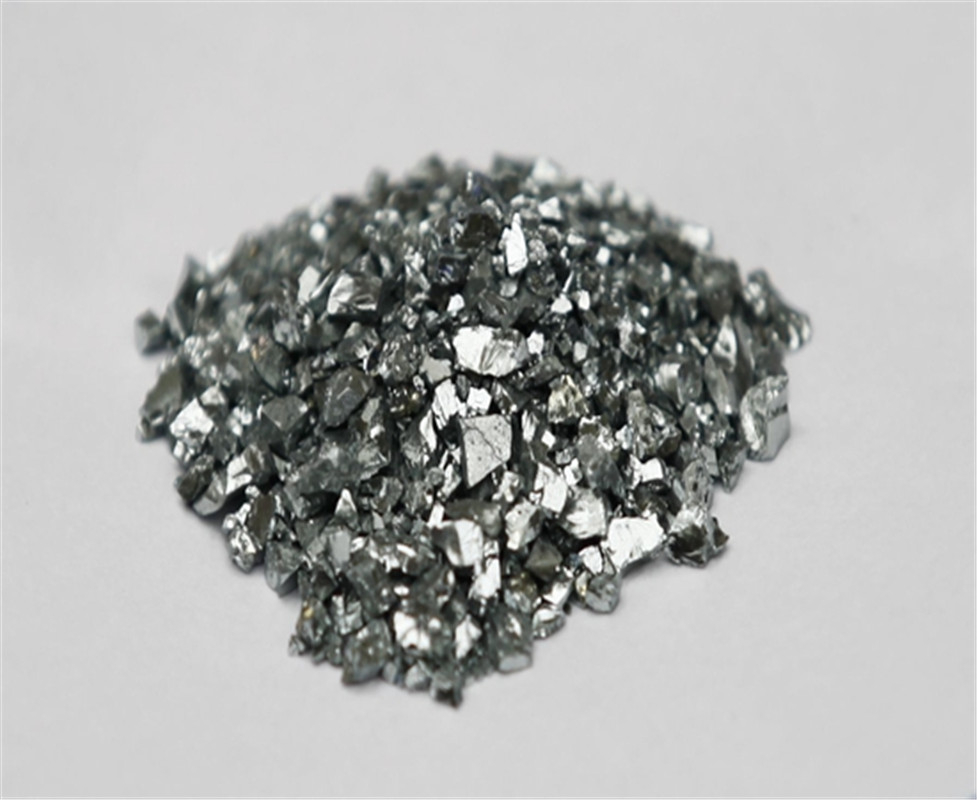
.jpg "Silicon Metal (Si Metal)")
.jpg "Silicon Dioxide (SiO2 quartz)")
Silicon Metal (Si Metal) Silicon Dioxide (SiO2 quartz)
Ordinary Ingredients, Extraordinary Structure
Now we can answer the question we started with: the ingredients for making split-ring resonators—and all optical metamaterials—are just plain old metals and dielectrics.
Gold, silver, aluminum, copper. Plus silicon, glass, and polymers. You see this stuff everywhere. A gold bar won't make you invisible. A sheet of glass won't bend light backward. But when scientists take these ordinary materials and arrange them into specific geometric patterns with nanometer precision? That's when the magic happens.
And that's what's so fascinating about optical metamaterials. The "magic" isn't about using some rare, exotic material. It's all about how you arrange the ingredients.
Think about carbon. Same element, but arrange it one way and you get soft, black graphite. Arrange it another way and you get hard, transparent diamond. Optical metamaterials take this idea to the extreme. At the nanoscale, structure is function. Arrangement is property.
The Real Challenge Isn't the Ingredients
So if the ingredients are so ordinary, does that mean making optical metamaterials is easy?
Not even close. The real difficulty isn't finding some rare material. It's figuring out how to machine these ordinary materials into incredibly precise nanostructures.
Right now, scientists face a few big challenges:
- Precision: The structural details of optical metamaterials usually need to be controlled down to tens of nanometers—about the size of a virus. Regular machining doesn't stand a chance. You need high-end semiconductor tools like electron-beam lithography and focused ion beams.
- 3D fabrication: Lots of interesting optical effects require three-dimensional structures. But current nanofabrication techniques are painfully slow and expensive when it comes to stacking multiple layers.
- Material loss: Metals absorb some light energy at optical frequencies, which cuts into the "efficiency" of the metamaterial. Finding low-loss alternatives is a hot area of research right now.