Why Tantalum Capacitors Are Essential in Modern Electronics
Capacitors may not attract the same attention as processors or displays, but without them, modern electronics simply would not function. Among the many capacitor technologies available today, tantalum capacitors occupy a uniquely important position—valued for their reliability, compact size, and stable electrical performance in demanding environments.
The Unique Nature of Tantalum
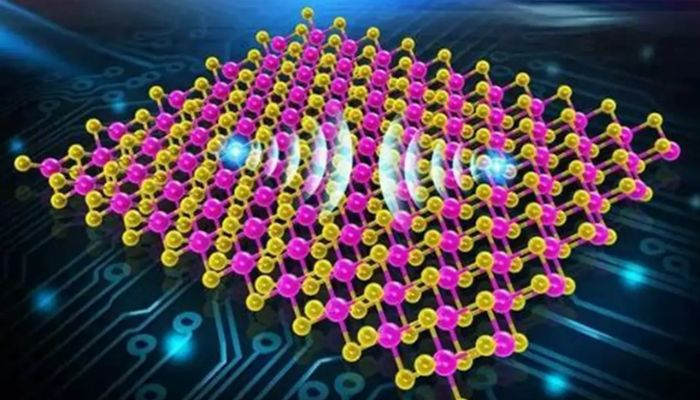
Tantalum is a rare, refractory metal with very good corrosion resistance, high melting point, and good electrical properties. The common form in which tantalum is used for capacitors is in the form of a powder, which is compressed and sintered to a porous anode. This has a microstructure that imparts the final product with a very large surface area and hence a large capacitance in a small volume.
Subsequently, a thin layer of tantalum pentoxide (Ta₂O₅) forms on the surface of the anode through electrochemical oxidation. The oxide layer constitutes a dielectric, and the stability of this layer represents one of the main reasons through which tantalum capacitors are capable of acting with very consistent standards over very long service lives.
High Capacitance in a Small Footprint
One of the main reasons tantalum capacitors are indispensable in modern electronics devices is because of their very high volumetric efficiency. To put this another way, tantalum capacitors offer much more capacitance for a much smaller volume compared to some other types of capacitors, especially standard aluminum electrolytic types of capacitors.
This also means that tantalum capacitors are very useful in applications where space is limited, such as:
- Smartphones and tablets
- Wearable electronics
- Implantable medical devices
- Compact power management modules
As electronic design continues to advance towards thinner, lighter, and more densely populated assemblies, packaged devices that offer miniaturization with high-performance capabilities are a necessity.
Electrical Stability and Reliability
Unlike some capacitance devices which experience large parameter changes, tantalum capacitors are sought after for their electrical stability. The capacitance value of tantalum remains relatively constant even when subjected to various temperature, frequency, and voltage changes. This makes the device very important in systems where predictable operation is a necessity.
Equally significant is their long-term reliability. If correctly specified and used within specified voltage derating conditions, tantalum capacitors display very low failure rates. It is owing to their reliability that they find extensive usage in high-reliability industries like:
- Aerospace
- Medical
- Industrial automation
In all of these applications, failure, far from being an inconvenience, can be a catastrophe.
Low Leakage Current Performance
Of the major capacitor types, tantalum capacitors are noted for providing low leakage current, especially in contrast to that of aluminum electrolytic capacitors. Low leakage is essential in battery-operated and low-power electronic systems where even small losses can greatly affect energy efficiency and operating lifetime.
In the case of devices such as pacemakers, IoT sensors, and portable instrumentation, low leakage contributes to power conservation and allows these systems to operate steadily over long periods.
Surface-Mount Compatibility and Modern Assembly
The rise of surface-mount technology (SMT) has reshaped the electronics manufacturing process. Tantalum capacitors, especially, are suited for this environment. Particularly, solid tantalum capacitors offer:
- Excellent soldering characteristics
- Consistent performance for automated assembly lines
- High mechanical stability when mounted
These characteristics combine to ensure very high manufacture yields and consistency of performance over an extended period, so that tantalum capacitors are a reliable choice for mass-produced systems as well as specialized, low-volume applications.
Tantalum Capacitors in Power Management
Contemporary electronic equipment depends significantly on power supply efficiency, where tantalum capacitors are mainly useful for various functions, such as decoupling, filtering, and storage.
This is largely due to the fact that their equivalent series resistance is relatively lower, enabling the reduction of voltage ripple and the stabilization of supply rails. With such capabilities, tantalum capacitors can play a crucial role in the protection of delicate components, a case evident in systems with microprocessors and memory modules, for instance. A balance is often achieved in relation to the cost of tantalum capacitors.
Comparison with Alternative Capacitor Technologies
Although ceramic capacitors have excellent high-frequency properties, aluminum electrolytic capacitors have good value for money in terms of capacitance, but when we consider a compromise, no other alternative is better than a tantalum capacitor. Tantalum capacitors have better immunity to DC bias compared to ceramic capacitors, while they also have better volume efficiency along with long-term reliability compared to aluminum electrolytic capacitors.
|
Parameter |
Tantalum Capacitors |
Aluminum Electrolytic |
Multilayer Ceramic (MLCC) |
|
Volumetric Capacitance |
Very high (up to ~1,000 µF/cm³) |
Moderate |
High (size-dependent) |
|
Capacitance Stability |
Excellent |
Moderate (aging, temp effects) |
Poor to moderate (DC bias effect) |
|
Leakage Current |
Low (µA range) |
Higher (mA range typical) |
Very low |
|
ESR |
Low to moderate |
Moderate to high |
Very low |
|
Size Efficiency |
Excellent |
Poor to moderate |
Excellent at small values |
|
Typical Applications |
Medical, aerospace, power management |
Bulk filtering, consumer power |
High-frequency decoupling |
|
Long-Term Reliability |
Very high (with derating) |
Moderate |
High |
For more information, please check Stanford Electronics.
Conclusion
From consumer electronics to life-saving medical devices, tantalum capacitors quietly enable the performance, reliability, and miniaturization that define modern electronics. Their unique combination of high capacitance density, electrical stability, low leakage current, and long-term reliability makes them difficult to replace in many critical applications.
As electronic systems continue to evolve toward higher integration and greater performance demands, tantalum capacitors are likely to remain a cornerstone technology—proof that sometimes the most essential innovations are the ones we rarely notice.
Reference:
[1] Electronics. (2026, January 26). In Wikipedia.