Lanthanum-Nickel (LaNi5) Alloy Particles: A Versatile Material for Hydrogen Storage & New Energy Industries
What Exactly Are Lanthanum-Nickel Alloy Particles?
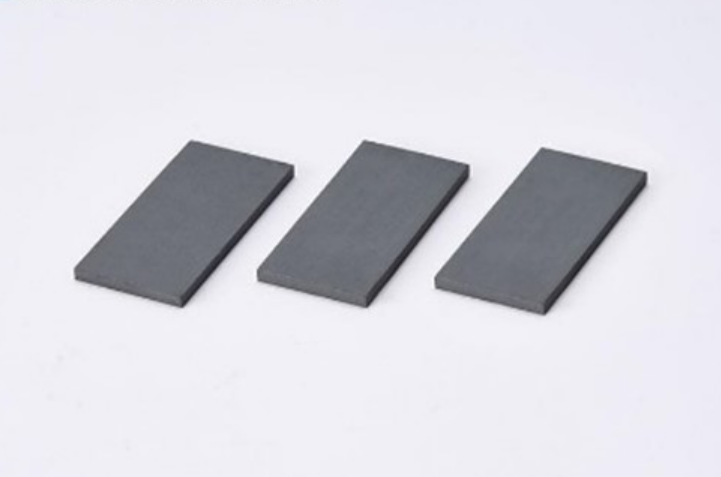
Lanthanum-nickel alloy is a type of intermetallic compound, most commonly represented by the chemical formula LaNi5—one lanthanum atom bonded with five nickel atoms. It comes in silver-gray granular or powdered form, and its stand-out trait is the ability to reversibly soak up and release hydrogen gas at room temperature under moderate pressure. Thanks to this unique property, it’s become a core functional material for the negative electrodes in nickel-metal hydride (Ni-MH) batteries.
LaNi5 crystal structure
Why Is LaNi₅ Such a Great Fit for Battery Anodes?
LaNi₅ works so well as an Ni-MH battery anode material largely because of how it stores hydrogen. When the battery charges, the alloy on the negative electrode absorbs hydrogen generated during electrolysis and forms metal hydrides. When the battery discharges, it releases that stored hydrogen to drive the electrochemical reaction.
Key Performance Specs
- Hydrogen storage capacity: roughly 1.4 wt%
- Theoretical electrochemical capacity: 372 mAh/g
- Room-temperature decomposition pressure: around 0.2 MPa, perfect for ambient-temperature operation
LaNi₅ packs plenty of perks: high hydrogen uptake, easy activation, strong resistance to poisoning, and well-balanced equilibrium pressure. These qualities made it one of the very first hydrogen storage alloys to hit commercial use for Ni-MH battery anodes.
Other Common Uses
LaNi₅ particles aren’t limited to just battery anode applications.
Solid-State Hydrogen Storage Medium
As a room-temperature hydrogen storage material, LaNi₅ plays a vital role in hydrogen storage and transportation. That said, it has one major downside for real-world use: limited cycle life. Every time the alloy absorbs and releases hydrogen, its crystal lattice expands and contracts repeatedly. This leads to severe pulverization over time and shortens the material’s service life.
Researchers have come up with several ways to fix this issue. Doping the alloy with expanded graphite (EG) delivers dramatic performance improvements, for example. When LaNi₅ powder blended with 5.0% expanded graphite is pressed into pellets under 100 MPa, its thermal conductivity jumps to 16.47 times that of pure LaNi₅ powder. Its hydrogen absorption capacity rises by 47.9%, while hydrogen desorption capacity surges by 144.8%.
On top of that, LaNi₅ can act as a catalyst to modify other hydrogen storage materials like magnesium hydride (MgH₂). It effectively speeds up hydrogen molecule dissociation and boosts the kinetic performance of hydrogen uptake and release.
Catalysts & Sensor Materials
Beyond hydrogen storage, lanthanum-nickel alloy particles also serve as catalysts—one common use is synthesizing carbon nanotubes via chemical vapor deposition—and sensor components. Its one-of-a-kind hydrogen absorption and desorption behavior also opens up promising opportunities in energy conversion applications.
Market Outlook
Global demand for lanthanum-nickel alloys kept climbing back in 2024, with downstream demand mainly driven by Ni-MH batteries and solid-state hydrogen storage systems. As the hydrogen energy industry keeps expanding at a rapid pace, this proven room-temperature hydrogen storage material is set to see even stronger market demand down the line.
Stanford Electronics supplies high-grade LaNi5 alloy particles that balance consistent reliability and competitive pricing. Our material is an ideal pick for battery manufacturing, hydrogen energy systems, and other advanced energy applications.