Uses of Gallium Arsenide (GaAs) Wafers
Introduction
Gallium arsenide is one of the most widely used compound semiconductor materials today. Its applications can be divided into three phases.
The first phase began in the 1960s, when GaAs substrates were first used in LEDs and solar cells. For the next 30 years or so, their use was mainly limited to aerospace applications.
The second phase started in the 1990s. As mobile devices became popular, GaAs substrates began to be used for RF components in those devices.
The third phase began around 2010. With the widespread adoption of LEDs and smartphones, GaAs substrates entered large-scale commercial use. The facial recognition feature on the iPhone, for example, requires GaAs substrates.
Today, GaAs wafers are mainly used in three types of downstream devices: RF components, LEDs, and lasers.
RF Components Made with GaAs
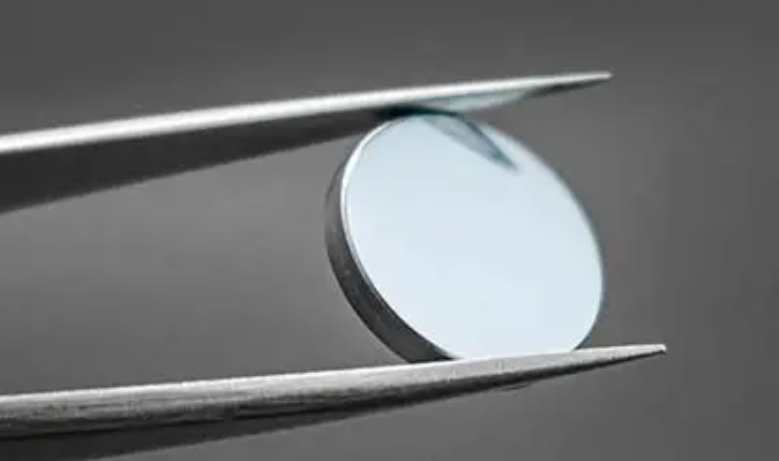
RF (Radio Frequency) components are critical for sending and receiving signals. Power amplifiers, which boost RF signals, directly determine the wireless communication distance and signal quality of mobile devices and base stations. Thanks to its significant advantages in electron mobility and high saturation electron velocity, GaAs has long been one of the mainstream substrate materials for RF power amplifiers.
Entering the 5G era, 5G communications place much higher demands on power, frequency, and transmission speed. RF components made with GaAs substrates are exceptionally well-suited for high-frequency circuits that require long-distance and long-duration communication. In 5G, GaAs's material advantages become even more pronounced.
LEDs Made with GaAs
An LED is a solid-state lighting device made from compound semiconductors like GaAs or GaN that converts electrical energy into light. Different materials determine the LED's emission wavelength and color. Based on chip size, LEDs can be divided into conventional LEDs (millimeter-scale), Mini LEDs (sub-millimeter-scale), and Micro LEDs (micrometer-scale).
Conventional LEDs are used for general lighting, outdoor large displays, and similar applications. These LEDs have relatively low technical barriers and represent the low-end market for GaAs substrates—low value-added and highly competitive.
Mini LEDs and Micro LEDs, on the other hand, are used in next-generation displays. These have much higher technical barriers.
Mini/Micro LEDs have two main application directions:
- RGB direct display: Enables higher-resolution, small-size displays, but the technical requirements and cost are high. Mainly used for very large screen applications.
- Mini LED backlighting: Used in TVs, automotive displays, laptops, monitors, etc., significantly improving the contrast and energy efficiency of liquid crystal displays.
Lasers Made with GaAs
Lasers are high-barrier devices that generate light through stimulated emission. They have complex structures. Taking advantage of GaAs's high electron mobility and excellent optoelectronic properties, lasers and sensors made with GaAs substrates offer high power density, low energy consumption, high temperature resistance, high luminous efficiency, and high breakdown voltage. These devices are widely used in fields like artificial intelligence and autonomous driving.
The Main Growth Driver: VCSEL
VCSEL (Vertical-Cavity Surface-Emitting Laser) is a type of laser that emits light vertically from the top surface. Multiple VCSELs can be arranged in arrays to create parallel light sources, which are used for facial recognition and full-body recognition. They are already widely used in smartphones.
As a foundational sensor for 3D sensing technology, VCSEL has broad prospects in emerging fields such as biometric identification, smart driving, robotics, smart homes, smart TVs, smart security, 3D modeling, facial recognition, and VR/AR. With the deeper adoption of 5G, the Internet of Things (IoT), and 3D sensing technologies, the VCSEL market will continue to grow rapidly, driving demand for GaAs substrates.
Stanford Electronics Offers GaAs Wafers
Stanford Electronics offers single-crystal GaAs wafers produced using two primary growth techniques—LEC (Liquid Encapsulated Czochralski) and VGF (Vertical Gradient Freeze). This allows us to provide our customers with the broadest selection of GaAs materials, featuring highly uniform electrical properties and excellent surface quality.
.jpg "Silicon Dioxide (SiO2 quartz)")