Alumina vs. Boron Carbide vs. Silicon Nitride vs. Silicon Carbide: A Comparison of Four Insulating Substrate Materials
Insulating substrates play multiple roles in electronics and power systems—they provide mechanical support, electrical insulation, and heat dissipation. Ceramic materials are the go-to choice for high-performance insulating substrates because of their excellent electrical insulation, high-temperature resistance, and chemical stability. Alumina, boron carbide, silicon nitride, and silicon carbide are four common ceramic substrate materials. They differ significantly in thermal conductivity, mechanical strength, electrical insulation, and cost—making each one suitable for different engineering applications.
Basic Material Properties
1. Alumina
Alumina ceramics are made primarily of aluminum oxide, typically at 75% or higher. The raw material is abundant, and this is the most widely used ceramic substrate material by far—accounting for about 90% of all ceramic substrates. Alumina insulating plates offer balanced overall performance, but their thermal conductivity is lower compared to the other materials on this list.
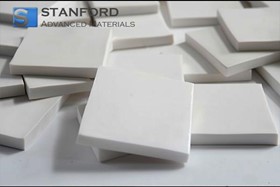
Wear-Resistant Ceramic Sheet Al2O3 Alumina
2. Boron Carbide
Boron carbide is an ultra-hard ceramic—only diamond and cubic boron nitride are harder. It has low density and outstanding wear resistance. However, boron carbide has relatively high electrical conductivity, and its sintering process is complex. That's why it's not commonly used as an insulating substrate material. You're more likely to find it in wear-resistant components and ballistic armor.
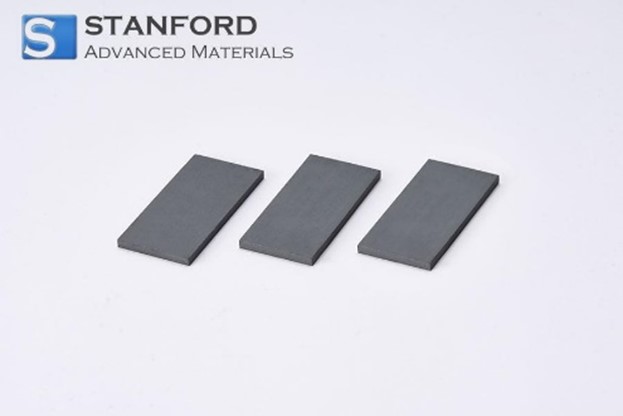
3. Silicon Nitride
Silicon nitride has three crystal structures, with the hexagonal form being the most common. Its single-crystal theoretical thermal conductivity can reach 400 W/(m·K), giving it real potential as a high-thermal-conductivity material. Among ceramics, silicon nitride stands out for its mechanical strength—both flexural strength and fracture toughness are high.
4. Silicon Carbide
Silicon carbide is a covalent compound made of silicon and carbon. It has high thermal conductivity, high hardness, and excellent oxidation resistance. Its decomposition temperature is above 2500°C, and it can still be used in oxidizing atmospheres at 1600°C. Silicon carbide's thermal conductivity is significantly higher than alumina, but its dielectric constant is also higher.
Silicon Carbide Plate (SiC Plate)
Thermal Conductivity Comparison
Thermal conductivity is one of the most important specs for insulating substrates—it directly affects how well a device can shed heat.
|
Material |
Thermal Conductivity (W/(m·K)) |
|
Alumina |
~30 |
|
Boron Carbide |
~30–40 |
|
Silicon Carbide |
~85–170 |
|
Silicon Nitride |
~86–120 |
Alumina sits at about 30 W/(m·K)—the lowest of the four. That's the main thing holding it back in high-power applications.
Silicon carbide is significantly higher, ranging from about 85 to 170 W/(m·K). The exact number varies quite a bit depending on purity and how it's made.
Silicon nitride is in the same ballpark as silicon carbide, around 86 to 120 W/(m·K). Its single-crystal theoretical value is 400 W/(m·K), but real-world products still fall short of that.
Boron carbide's thermal conductivity is relatively low, around 30–40 W/(m·K)—about the same level as alumina.
When it comes to moving heat, silicon carbide and silicon nitride are clearly better than alumina and boron carbide.
Dielectric Properties Comparison
Dielectric properties determine how well an insulating substrate works in high-frequency circuits and high-voltage environments. The key parameters are dielectric constant (Dk) and dielectric loss (Df).
|
Material |
Relative Dielectric Constant (1 MHz) |
|
Alumina |
~9–10 |
|
Silicon Carbide |
~6.5–10 |
|
Silicon Nitride |
~7.5–8.3 |
|
Boron Carbide |
Limited data, typically higher |
Alumina's dielectric constant is about 9–10, with low dielectric loss. It's stable at high frequencies, which is one reason it's so widely used in electronics.
Silicon carbide has a wide dielectric constant range, roughly 6.5 to 10. Some forms of SiC have a fairly high Dk, which makes them less suitable for high-density packaging.
Silicon nitride's dielectric constant is around 7.5–8.3, with dielectric loss between 0.001 and 0.1. It's in the middle of the pack.
Boron carbide doesn't have much published data on dielectric properties. And since it's somewhat conductive, it's not usually the first choice for high-frequency insulation.
Important note: Silicon carbide and boron carbide can be somewhat conductive under certain conditions. SiC's resistivity drops as temperature rises, so it can lose its insulating properties at high temperatures. Boron carbide is naturally semiconductive with relatively low resistivity. So if you need a substrate to stay electrically insulating under high voltage or high temperature, alumina and silicon nitride are safer bets.
Mechanical Performance Comparison
Insulating substrates have to handle mechanical stress, thermal stress, and vibration. Mechanical properties directly affect reliability and service life.
|
Material |
Hardness |
Flexural Strength |
Fracture Toughness |
Density (g/cm³) |
|
Alumina |
Moderately high |
Medium |
Low |
~3.9 |
|
Boron Carbide |
Extremely high |
Medium |
Low |
~2.5 |
|
Silicon Carbide |
High |
High |
Medium |
~3.21 |
|
Silicon Nitride |
High |
Highest |
Highest |
~3.17 |
Boron carbide is the hardest of the four—only diamond and cubic boron nitride beat it. But its fracture toughness is poor; it's brittle and cracks easily under impact. Its density is about 2.5 g/cm³, the lowest of the group.
Silicon nitride has outstanding mechanical strength among ceramics. Its flexural strength and fracture toughness are better than the other three. That means silicon nitride substrates handle vibration and thermal shock more reliably.
Silicon carbide has high hardness and good strength, but its toughness is a bit lower than silicon nitride. It's also hard to sinter—you usually need sintering aids to get it dense.
Alumina offers balanced mechanical properties. Its hardness and strength are good enough for most applications, but fracture toughness is low, so impact resistance is limited.
One study on wear between ceramic pairs found that B₄C-SiC composite had its highest wear rate when rubbing against Si₃N₄, and its lowest when rubbing against Al₂O₃.[1] So wear behavior really depends on which two ceramics are paired.
Chemical Stability and Corrosion Resistance
Insulating substrates may be exposed to moisture, chemicals, or high-temperature atmospheres. Chemical stability directly affects service life.
Alumina has good chemical stability—it resists acids and alkalis and doesn't react easily under normal conditions. That's another reason it's so widely used.
Silicon carbide has excellent oxidation resistance. It stays stable in high-temperature oxidizing atmospheres and can run at 1600°C for extended periods. Its corrosion resistance is also outstanding.
Silicon nitride has good oxidation and corrosion resistance. But in high-temperature steam, it can hydrolyze.
Boron carbide has decent chemical stability, but its oxidation resistance is weaker—it oxidizes relatively easily at high temperatures, forming boron oxide.
One more thing: silicon carbide and boron carbide are hard to sinter. Boron carbide usually needs high-temperature, high-pressure sintering or sintering aids. Silicon carbide's strong covalent bonding makes densification difficult, so small amounts of boron or aluminum compounds are often added as sintering aids. These additives can affect product purity.
Cost Comparison
Cost is always a constraint in material selection.
Alumina is the cheapest—abundant raw materials and mature production processes. That's why it holds 90% of the ceramic substrate market.
Silicon carbide has moderate raw material cost, but the sintering process is complex and requires high temperatures (often above 2000°C), which drives up processing costs.
Silicon nitride has higher raw material and production costs, which limits its use in cost-sensitive applications.
Boron carbide is the most expensive of the four—both raw material and sintering are costly and complex.
|
Material |
Raw Material Cost |
Processing Difficulty |
Overall Cost |
|
Alumina |
Low |
Low |
Lowest |
|
Silicon Carbide |
Medium |
Medium–High |
Medium |
|
Silicon Nitride |
Medium–High |
High |
Higher |
|
Boron Carbide |
High |
Very high |
Highest |
Material Selection Guide
Different applications call for different materials.
1. General electronics packaging, home appliances, automotive electronics → Alumina
Alumina has the lowest cost, good dielectric properties, and high chemical stability. It meets the needs of most routine applications. If power density isn't crazy high and cooling demands are modest, alumina gives you the best bang for your buck.
2. High-power electronics, high heat dissipation needs → Silicon Carbide or Silicon Nitride
When devices run hot and need efficient cooling, alumina's thermal conductivity just isn't enough. Silicon carbide and silicon nitride are significantly better at moving heat, making them suitable for high-power LEDs, power modules, and IGBTs.
Choosing between them depends on your priorities:
- If thermal conductivity is your #1 concern, go with silicon carbide.
- If you also need mechanical strength and thermal shock resistance, silicon nitride is the better fit.
3. High mechanical strength, vibration and impact resistance → Silicon Nitride
Silicon nitride has the best flexural strength and fracture toughness among ceramics. It's a great choice for applications that face mechanical stress—like rail transportation, aerospace, and automotive (vibration-heavy environments).
4. Need tight control over dielectric constant → Alumina or Silicon Nitride
Silicon carbide has a fairly high dielectric constant with a wide range, which can cause signal integrity problems in high-frequency circuits. Alumina and silicon nitride have more stable dielectric properties and are better suited for high-frequency applications.
5. Wear parts, special applications → Boron Carbide
Boron carbide's extreme hardness gives it unique value in wear-resistant applications. But its high cost and complex processing limit how widely it's used. Unless you have a special need for extreme hardness, boron carbide isn't usually recommended as a general-purpose insulating substrate material.
.jpg "Silicon Dioxide (SiO2 quartz)")