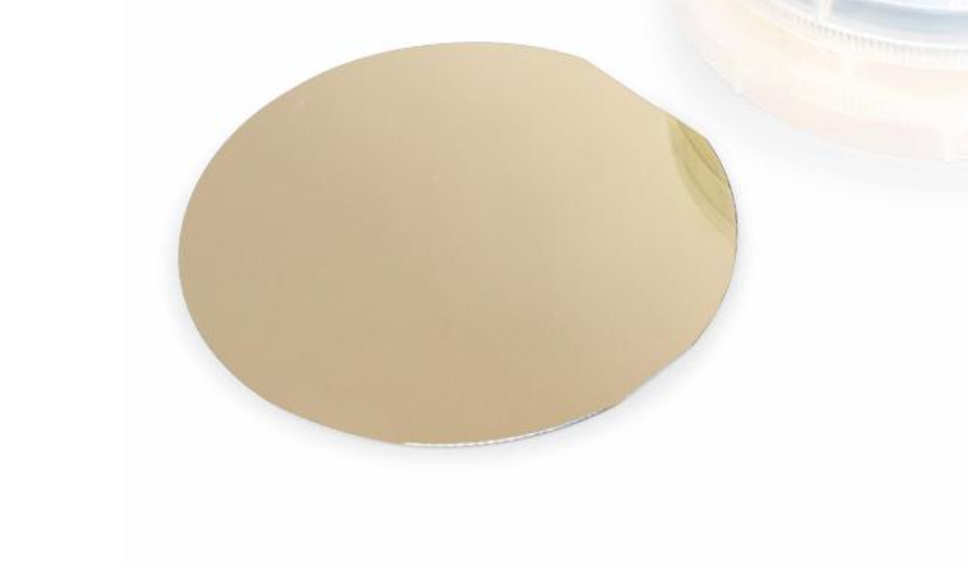
What Are the Common Semiconductor Substrate Materials and How Do You Choose?
The semiconductor substrate plays an essential role in manufacturing chips since it is the base layer upon which epitaxial layers and electronic devices can be grown. This is similar to the foundation of a building, where the type of foundation affects the quality of the structure that is erected.
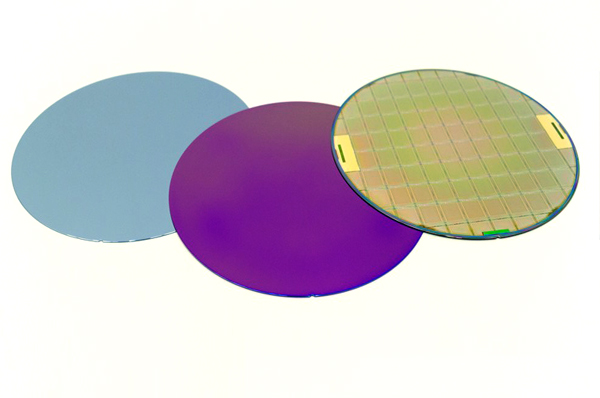
Commonly Used Semiconductor Substrates
Typically, there are three kinds of substrates, which include elemental semiconductors, compound semiconductors, and insulator substrates used for packaging purposes.
1. Silicon Substrate (Si)
The most mature silicon semiconductor substrate material has a bandgap of around 1.12 eV. Silicon's main strengths lie in its low costs and advanced manufacturing process. However, the major disadvantage associated with silicon lies in its relatively lower mobility.
2. Germanium Substrates (Ge)
Germanium has a wider bandgap of 0.67 eV and higher electron mobility compared to silicon. Therefore, it can be used in high-frequency applications. But since germanium is a rare earth metal, it is costlier and difficult to process. Hence, it is mainly employed in high-frequency transistors, photo-detectors, and photovoltaics.
3. Compound Semiconductor Substrates
|
Material |
Bandgap |
Key Strengths |
Main Applications |
|
1.43 eV |
Excellent high-frequency, high-speed, and optoelectronic performance |
RF devices, satellite communications, LEDs, lasers |
|
|
2.3 eV (wide bandgap) |
High voltage resistance, high frequency, low energy loss, high thermal conductivity |
EVs, 5G communications, PV inverters, power electronics |
|
|
Gallium Nitride (GaN) |
3.4 eV (wide bandgap) |
High breakdown field, high electron mobility |
LEDs, RF power amplifiers, fast chargers, power management |
|
Indium Phosphide (InP) |
0.34 eV |
High electron mobility, excellent optoelectronic performance |
Photodetectors, lasers, high-speed transistors |
4. IC Packaging Substrate Materials
Apart from substrate materials employed in manufacturing chips, there is another class called 'substrate material' for carrying the chips and forming electrical connections:
- Organic Substrates, like FR-4, BT (Bismaleimide Triazine) Resin, and ABF (Ajinomoto Build-up Film), are inexpensive and involve mature processing technologies, thus popularly utilized in consumer products.
- Ceramic Substrates, like Alumina (Al2O3), Aluminum Nitride (AlN), and Silicon Nitride (Si3N4), offer good thermal properties and have a thermal expansion coefficient close to that of silicon. Hence, these substrates find extensive use in high-power devices and RF applications.
- Glass Substrates offer good resistivity and less dielectric loss. Showing potential in 2.5D/3D packaging technology.
How to Choose – Key Factors to Consider
When selecting a semiconductor substrate material, you need to evaluate several dimensions.
1. Crystal Structure and Lattice Matching
The substrate material should have the same or a similar crystal structure as the epitaxial material, and the lattice constants should match as closely as possible. Too much mismatch creates stress, leading to dislocations and defects. For example, GaN matches reasonably well with SiC but has a larger mismatch with Si, requiring a buffer layer.
2. Thermal Properties
High-power devices need a substrate with high thermal conductivity to dissipate heat. Aluminum nitride can reach over 170 W/m·K, alumina is around 26-27 W/m·K, while glass and organic materials have very low thermal conductivity (0.2-0.5 W/m·K).
The coefficient of thermal expansion (CTE) of the substrate and the chip should be as close as possible. Otherwise, temperature cycling can cause delamination or cracking. Aluminum nitride and silicon nitride have good CTE matching with silicon.
3. Electrical Properties
- Resistivity: High-frequency and RF applications require high resistivity to reduce signal loss and crosstalk. Glass, sapphire, and gallium arsenide (about 4×10⁷ Ω·cm) have much higher resistivity than silicon (1-10 Ω·cm).
- Dielectric Constant (Dk) and Dissipation Factor (Df): In high-frequency circuits, low Dk and low Df reduce signal delay and energy loss. For example, R-G545L has a Df of only 0.002, making it suitable for high-speed transmission.
4. Chemical Stability
The substrate needs to remain stable during high-temperature processes and in chemical environments, without reacting with the epitaxial layer or process gases.
5. Optical Properties (for Optoelectronic Devices)
For optoelectronic devices like LEDs, the substrate's light transmittance affects light extraction efficiency. Sapphire (Al₂O₃) is the mainstream substrate for LEDs because of its transparency and good lattice match with GaN.
6. Cost and Size
Silicon substrates are the lowest in cost and available in the largest sizes (up to 300mm), making them ideal for high-volume production. SiC, GaAs, InP, and other substrates are expensive and typically reserved for high-end or specialized applications.
Quick Reference Table – Common Material Properties
|
Material |
Dielectric Constant (Dk) |
Dissipation Factor (Df) |
Thermal Conductivity (W/m·K) |
CTE (ppm/°C) |
Best For |
|
Silicon (Si) |
~11.7 |
- |
~150 |
~2.6 |
Processors, memory, general ICs |
|
Gallium Arsenide (GaAs) |
~12.9 |
- |
~46 |
~5.7 |
RF, microwave, optoelectronics |
|
Silicon Carbide (SiC) |
~9.7 |
- |
~370 |
~4.0 |
High power, high frequency, EVs |
|
Alumina (Al₂O₃ 96%) |
9.5 |
0.0004 |
26 |
6.4-8.2 |
General ceramic substrates, compatible with Si/GaAs |
|
Aluminum Nitride (AlN) |
8.6 |
0.001 |
170-200 |
4.6 |
High-power heat dissipation, RF circuits |
|
Glass |
4.5-5.5 |
0.02-0.03 |
~0.2 |
~4-8 |
2.5D/3D packaging, high-frequency |
|
Quartz (SiO₂) |
3.82 |
0.000015 |
1.38 |
0.55 |
mmWave, ultra-low-loss applications |
|
FR-4 |
4.5 |
0.025 |
0.25-0.5 |
~14-17 |
Low-cost PCBs, low-frequency consumer electronics |
|
BT Resin |
4.4-4.8 |
0.015-0.016 |
~0.3 |
~3-13 |
IC substrates, mobile APs, memory |
Note: The values above are typical. Different grades of the same material may vary.
Material Selection Recommendations by Application
|
If you need... |
Recommended Substrate Material |
|
General logic / memory chips |
Silicon (Si) |
|
High-frequency RF / microwave circuits |
Gallium Arsenide (GaAs) or high-resistivity silicon |
|
High-power LEDs |
Sapphire, Silicon Carbide (SiC), or Gallium Nitride (GaN) |
|
EVs / PV inverters |
Silicon Carbide (SiC) |
|
High-power RF amplifiers |
Aluminum Nitride (AlN) ceramic substrate |
|
mmWave / radar |
Quartz (SiO₂) or PTFE-based high-frequency laminates |
|
High-speed digital IC packaging |
Low-loss BT resin or glass substrate |
|
High-density 2.5D/3D packaging |
Glass or silicon interposer |
|
Infrared detection / aerospace |
Mercury Cadmium Telluride (HgCdTe) or Germanium (Ge) |
Summary
Choosing a semiconductor substrate material is essentially a trade-off between performance, reliability, and cost:
- If you want mature, low-cost, high-volume production, silicon is the way to go.
- If your application involves high frequency, high speed, or optoelectronics, compound semiconductors like gallium arsenide or indium phosphide are better suited.
- If you're dealing with high power, high voltage, or high temperatures, wide-bandgap materials like silicon carbide or gallium nitride are the direction.
- If you're focused on packaging-level interconnection, heat dissipation, and signal integrity, you'll need to pick the best option from ceramic, organic, or glass packaging substrates.
We recommend clarifying the following information early in the material selection process: operating frequency, power density, operating temperature range, whether light transmission is needed, and production volume. Bringing this information to a conversation with our team at Stanford Electronics will help you lock in the best material solution faster.