
PTFE in Electronics and Electrical Applications
PTFE, or polytetrafluoroethylene, is now a fundamental material used in communication systems that operate at high frequencies, aerospace electronics, and advanced printed circuit board (PCB) production, all because of its unique dielectric and thermal qualities. In electronics, there is a strong trend toward operating at higher frequencies, reduced sizes, and increased reliability.
Why PTFE Stands Out in Electrical Applications
And there is an explanation why PTFE is extensively employed in electronics.
1. PTFE features a very low dielectric constant (approximately 2.1) and an extremely low dissipation factor (approximately 0.0002). In other words, the signal loss is insignificant at high frequency, thus, PTFE is an ideal insulation material for high-frequency and ultra-high-frequency equipment.
2. PTFE operates within a wide range of temperatures (from -80°C up to +260°C), and even can resist a temperature higher than 300°C for a short period of time. Thus, it is ideal for use in aerospace and automotive industries where the temperatures change dramatically.
3. The chemical resistance to virtually all agents: the material does not react with virtually any solvent, acid or alkali. It provides the electronic components with corrosion protection.
4. PTFE absorbs approximately 0.01% of water; thus, its insulating properties remain excellent at high humidity.
PTFE in PCB Manufacturing
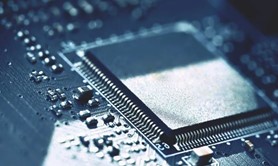
PTFE is an essential component of the manufacturing process of PCBs that have high frequency and speed.
In applications such as 5G communications, radars, satellite communications, and others, PTFE PCB reduces losses and delays while retaining signal integrity. PTFE is significantly more efficient at high frequencies than traditional substrates such as FR-4.
The softness and high coefficient of thermal expansion of PTFE make its use difficult in the process of PCB manufacture. It needs special drilling and lamination processes when spindle speeds and feed rates need to be adjusted to avoid burring when drilling and temperature and pressure to be controlled during lamination to avoid dimension instability.
PTFE has very low surface energy, so it requires special treatment with plasma or chemicals before metalizing holes for the purpose of successful plating of the substrate. It is an additional stage which increases the cost of PTFE PCBs.
Applications in Electronics and Electrical Engineering
- Communications with high frequencies: 5G communication towers, satellite systems, and radars need PTFE for radome applications, coaxial cables, and PCB substrates.
- Electronics in aerospace: For their insulating properties and fire resistance, aircraft harnesses, avionic connectors, and high-temperature sensors commonly have PTFE-insulated wires.
- Semiconductor and test instruments: As a transmission medium for high-frequency signals, PTFE is applied in probe cards and high-frequency test fixtures.
- Medical electronics: Due to its biocompatibility and resistance to sterilization, PTFE is applied for insulations and leads in implantable medical devices.
- Electronic in automotive: For their insulation purposes, new energy vehicles' high-voltage wiring harnesses and sensor connectors employ PTFE-insulated wires.
Conclusion
After decades of real-world use, PTFE has more than proven its worth in the electronics and electrical world. Its unique combination of properties keeps it irreplaceable in high-frequency, high-temperature, and high-reliability applications.
Stanford Electronics specializes in supplying electronic materials, including dielectric films, semiconductor materials, and insulation products. If you need help selecting the right PTFE material for your application, reach out to Stanford Electronics for expert guidance.