What's the Value of Molybdenum Disulfide (MoS₂) Crystals?
Molybdenum disulfide crystals are still mainly in the research and early pilot-production stages. But they're seen as a very promising candidate for next-generation semiconductor materials. Right now, single-crystal silicon is still the go-to for mainstream semiconductors. What makes molybdenum disulfide special, though, is that it's considered one of the 2D semiconductor materials that could break through the physical limits of silicon chips.
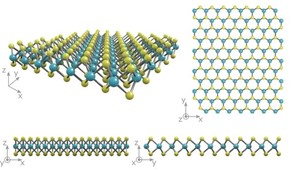
Where Does Molybdenum Disulfide (MoS₂) Show Its Potential?
The main value of molybdenum disulfide is that it addresses a few core bottlenecks that silicon chips are currently running into.
MoS₂ helps fix silicon's "short-channel effect" and leakage issues. As transistors on chips get smaller and smaller, silicon gets so thin that it struggles to turn off current completely—leading to leakage and serious heat buildup. MoS₂, on the other hand, can be made into a single-layer structure just 0.6 nanometers thick. That lets the gate electric field have "full control" over the current, which dramatically cuts leakage and power consumption. Some studies show that MoS₂-based devices could use as little as one-thousandth of the energy of silicon-based ones.
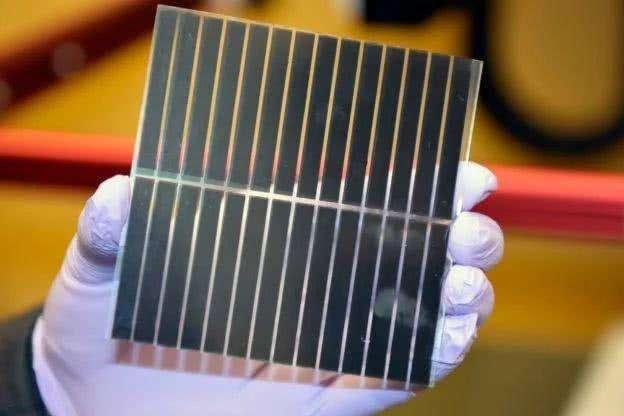
MoS₂ could make chips "foldable." Molybdenum disulfide is flexible, and it bends without breaking. Researchers have already used it to build flexible transistor arrays. They've even integrated it into the "electronic skin" of soft robots to sense tiny pressure changes.
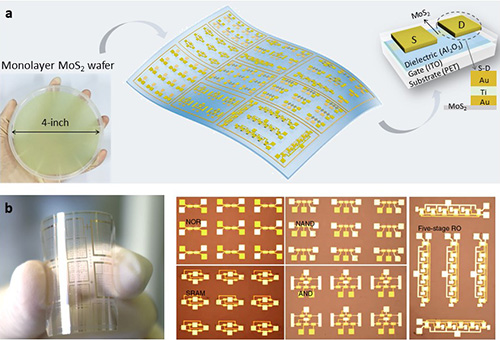
What Are the Potential Applications of Molybdenum Disulfide (MoS₂)?
Based on these properties, molybdenum disulfide is already showing real promise in several cutting-edge areas.
- More energy-efficient and faster transistors: It has decent carrier mobility and can switch on and off pretty quickly. Researchers have already built transistors with an on/off ratio close to 10¹²—basically a super switch that's "leak-proof."
- Flexible electronics: Think foldable phones, wearable devices, and the like.
- High-sensitivity sensors: It can be used in photodetectors, gas sensors, biosensors, and more.
- Optoelectronic devices: By tweaking its composition—say, adding selenium—you can extend its light absorption range into the near-infrared, making it useful for photodetectors.
- Silicon-free computers: Scientists have already built the world's first non-silicon computer using MoS2 (as an n-type transistor material) along with another 2D material, proving it's doable.
Conclusion
In short, molybdenum disulfide isn't common in today's commercial semiconductors. But it's one of the key materials that could make future electronics thinner, more flexible, and way more energy-efficient.
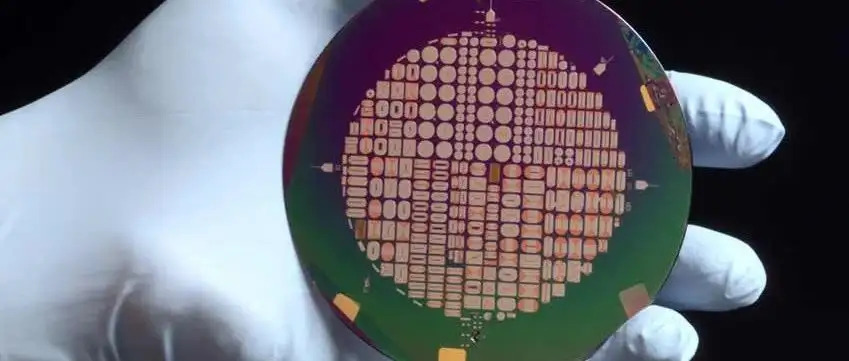
Molybdenum disulfide crystal of high quality is supplied in Stanford Electronics. We customize the size and shape based on the design of the customer's device.