
4 Things You Need to Know About PTFE Film
Polytetrafluoroethylene film (PTFE film) is a high-performance polymer material with exceptional corrosion resistance, heat resistance, and non-stick properties. It's widely used in industrial sealing, pipe repair, electronic insulation, medical devices, and more.
What Exactly is PTFE Film?
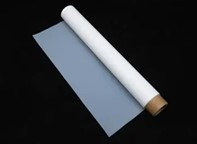
PTFE film, short for polytetrafluoroethylene film, is a thin sheet product made from polytetrafluoroethylene.
This stuff isn't your ordinary plastic — it's a fully fluorinated polymer. Carbon atoms are completely wrapped in fluorine atoms, forming an ultra-stable structure that's basically like giving the molecule a bulletproof vest. As a result, it barely reacts with any chemical, and it laughs off extreme heat.
The Remarkable Properties of PTFE Film
What makes PTFE film so impressive is its five "superpowers":
- Heat resistance. PTFE film can handle continuous service temperatures up to 260°C, and short-term exposure above 300°C — far beyond ordinary plastics.
- Extreme corrosion resistance. Acids, bases, organic solvents — none of them can touch PTFE film. Even aqua regia can't do a thing to it. It's practically a "chemical black hole."
- Low friction coefficient. PTFE film's surface is smooth as glass, with a friction coefficient of just 0.04–0.05. It's slippery like an ice rink, which is why it's commonly used as a lubricating layer for bearings and guide rails.
- Strong non-stick properties. Food, grease, glue — nothing sticks to it. It's one of the core ingredients in non-stick pan coatings.
- Excellent electrical insulation. PTFE film has a low dielectric constant and strong resistance to voltage breakdown, making it ideal for high-frequency electronic device insulation.
These properties have made it a star in aerospace, semiconductors, pharmaceuticals, chemicals, automotive manufacturing, and more. NASA, for example, used PTFE film for spacecraft seals because it stays stable in extreme environments.
Common Applications of PTFE Film
Here's the thing — PTFE film isn't just some fancy lab material. It has plenty of clever uses in everyday life too.
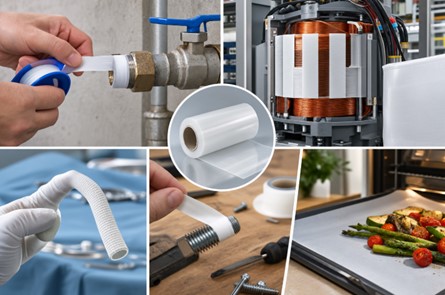
- Pipe and valve seal repair: Dealing with a threaded leak or flange seepage? Wrap some "PTFE repair tape" around it a few times, tighten the fitting, and you've got a temporary fix — perfect for emergency repairs.
- Industrial equipment insulation and protection: Used as an insulating barrier in motors and transformers to prevent short circuits. It can also be applied to metal surfaces to protect against oxidation and wear.
- Medical devices and bioengineering: Thanks to its excellent biocompatibility, PTFE film is used in medical-grade products like artificial blood vessels, wound dressings, and dialysis membranes.
- DIY tool recommendations: Around the house, you can use PTFE film to wrap screws and fittings to prevent rust. It also works great as a kitchen waterproof mat or a non-stick grilling sheet.
How to Pick the Real PTFE Film
The market is flooded with all kinds of PTFE film — don't get fooled! Here's how to screen for the real thing:
- Check the material. Genuine PTFE film is milky white or semi-transparent, flexible but hard to tear, with a slight waxy feel. Cheap knockoffs may be yellowed, brittle, or feel stiff.
- Look at thickness and uniformity. Quality PTFE film typically ranges from 0.05 mm to 0.2 mm, with even thickness and no bubbles. Too thick and it won't conform well; too thin and it tears easily.
- Look for standard certifications. Reputable manufacturers label their products with ISO and other industry standards. Some export-grade products also carry FDA (food-grade) or UL (electrical safety) certifications.
- Avoid the "composite film" trap. Some so-called PTFE films are actually composites of PTFE + adhesive backing + fabric. They're cheaper but not suitable for high-temperature environments.
Stanford Electronics offers PTFE film in a variety of specifications.