Semiconductor Materials for 5G and 6G Communication Systems
5G technology took communication to an entire new level: faster speeds, lower latency, and more reliable connections than ever before. However, going toward 6G, even more network speed is required, ultra-low latency, and increased connectivity, for which existing semiconductor materials are being pushed to their extreme.

The Role of Semiconductor Materials in 5G Networks
While 5G enables download speeds up to 100 times faster compared to 4G, enables much lower latency, and improves network reliability, the underlying driver is very much semiconductor materials applied in RF devices, amplifiers, modulators, and antennas, among other parts of communication systems.
1. Gallium Nitride (GaN): A Key Material for High Power and Efficiency
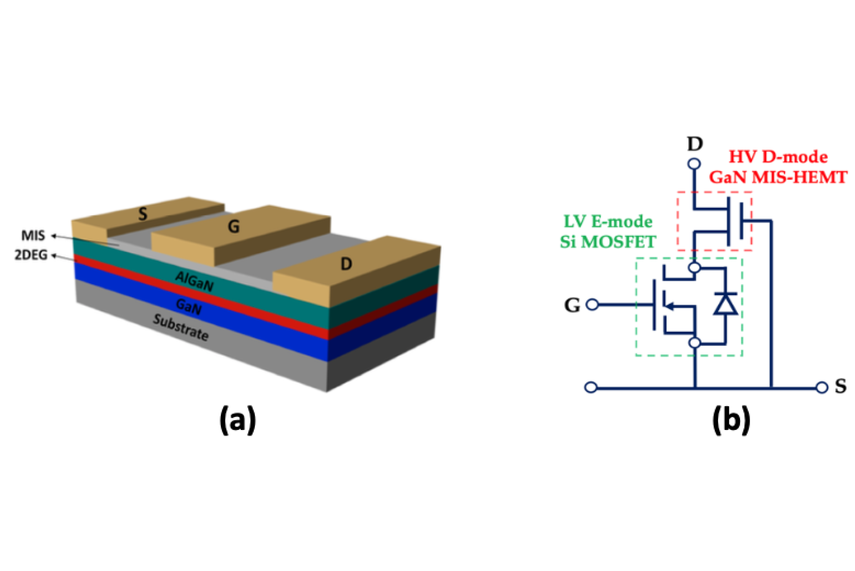
Gallium Nitride is one of the most critical semiconductor materials in the 5G base station and other high-frequency components. Compared to traditional silicon-based components, it has higher power density, excellent efficiency, and operates at higher frequency while remaining more thermally stable.
In the 5G base stations, GaN is used in PAs for better transmission over long-distance paths. The high frequency requirements of 5G can be handled by the GaN amplifiers, which also have high thermal conductivity to handle the high heat during high-power operations. This enables 5G networks to provide better data rates while not compromising their performance and reliability.
Efficiency of GaN minimizes energy consumption, which is very important when it comes to the large-scale deployment of 5G infrastructure. By improving the power efficiency of base stations, GaN helps reduce overall operational costs and environmental impact related to 5G networks.
2. Silicon Carbide (SiC): Power Efficiency for 5G Systems
Another critical material for 5G technology, especially in the field of power conversion, is silicon carbide. SiC is highly efficient at high voltages, which makes it essential in 5G applications that require fast signal processing and power conversion. SiC is used in power electronic components, such as rectifiers and inverters that convert AC to DC and DC to AC for 5G transmitters.
SiC is of particular use in 5G energy management systems due to its capability to manage high-power signals with very minimal losses. This results in lower dissipation of heat, heightened thermal management, and generally better efficiency within 5G infrastructure, ultimately allowing the operators of such technology to deploy more energy-efficient networks.
3. Silicon (Si) and Advanced RF Materials
Although GaN and SiC are promising and up-and-coming materials, silicon is still the mainstay in these 5G applications, especially where the costs need to be low and volumes high. It forms the basis of the complementary metal-oxide-semiconductor (CMOS) technology on which most semiconductor telecommunications devices are built. Silicon will continue to play a very crucial role in 5G ICs due to its cost and scalability for both switching and signal processing.
Additionally, silicon-based advanced RF semiconductors, including SiGe, are increasingly being used in 5G systems. SiGe offers better performance at high frequencies and is used in RF amplifiers, mixers, and oscillators critical to the processing of 5G signals.
Challenges and Requirements for 6G Networks
While 5G has already transformed the industries, future 6G networks promise to be even more transformational, offering data rates up to 1 Tbps, ultra-low latency in the sub-millisecond range, and the ability to connect billions of devices simultaneously. None of these breakthroughs will be possible without the evolution of semiconductor materials.
1. Beyond 5G: The Need for New Materials for Higher Frequencies
6G will exploit terahertz frequencies (0.1–10 THz), well beyond those of the microwave bands used for 5G today, which cap below 100 GHz. To function within this regime, materials must be electrically conductive with greater efficiency and better bandgap and heat-dissipation characteristics.
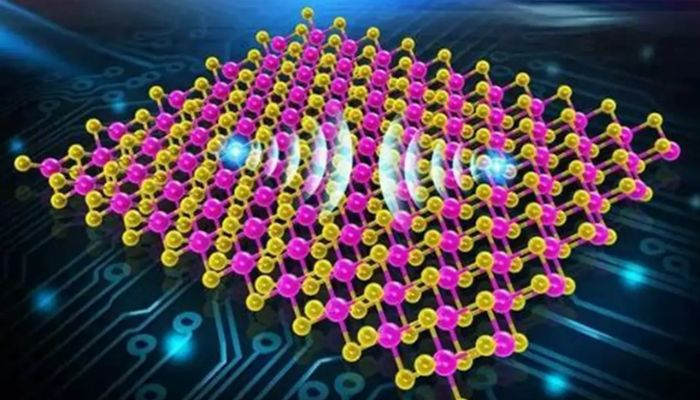
Graphene is a two-dimensional material comprising a single layer of carbon atoms. For 6G, graphene is considered one of the most exciting prospects, given its remarkable electrical conductivity, mechanical flexibility, and high thermal conductivity, ideal for communication at high frequency and low power. Graphene-based transistors and antennas may have key roles in the development of THz communication systems for 6G.
2. 2D Materials and Their Potential for 6G
Besides graphene, other 2D materials, such as TMDs, are also being investigated for application in communication systems of 6G. MoS2 and WSe2 are examples of materials with promising electronic and optical properties that may help realize high-frequency 6G transistors and optical modulators.
These 2D materials exhibit high carrier mobility and optical nonlinearity, important for both high bandwidth and low latency in 6G. Specifically, their operation in the terahertz range suggests great potential toward future ultra-fast communication networks.
3. Quantum Dots and Nanomaterials for 6G
Quantum dots also are being explored for 6G-applications. These nanoscale semiconductor structures have discrete energy levels and could manipulate light at the quantum level, making them potential candidates for optical communication systems in 6G to achieve ultra-fast data transmission with minimum signal loss.
Quantum dots can be used in photodetectors, lasers, and modulators that work at higher frequencies, providing the huge bandwidth capabilities needed for 6G networks. In addition, these materials have a potential to overcome some of the physical limitations of current semiconductor materials at terahertz frequencies.
Semiconductor Materials for 6G Network Infrastructure
The infrastructure for 6G will, in turn, require enhanced signal processing units, power management systems, and energy-efficient transceivers. Materials such as gallium nitride, silicon carbide, and graphene are most likely to play a vital role in these aspects of system design, owing to their suitability for dealing with high-frequency signals and managing extreme heat generated in the terahertz range.
More nanoelectronics and quantum computing advances are likely to be required by the distributed computing systems and massive MIMO architectures that will form part of 6G. This will include quantum dot lasers and MBE growth techniques to allow higher performance and more compact devices.
Conclusion
Both 5G and 6G communication systems will be centered on semiconductor materials that enable faster data speeds with low latency and highly reliable connectivity. For 5G, gallium nitride, silicon carbide, and silicon have turned out to be very important materials.
Still, with the advent of 6G, the game becomes even tougher, with graphene, transition metal dichalcogenides, and quantum dots pointing to ways to unleash terahertz frequencies, ultra-fast data rates, and very high efficiencies of communications. The road ahead in telecommunications basically depends on events in material science to meet ever-increasing needs for speed, connectivity, and innovation. For more information, please check Stanford Electronics.